Order before 12 PM EST today for rush handling · $150 regular / $250 rush

Apostille FAQ Massachusetts Complete Guide
Answers to the most common apostille questions in Massachusetts. Learn document requirements, processing steps, timelines, and common mistakes.
Apostille MA
12/23/20252 min read
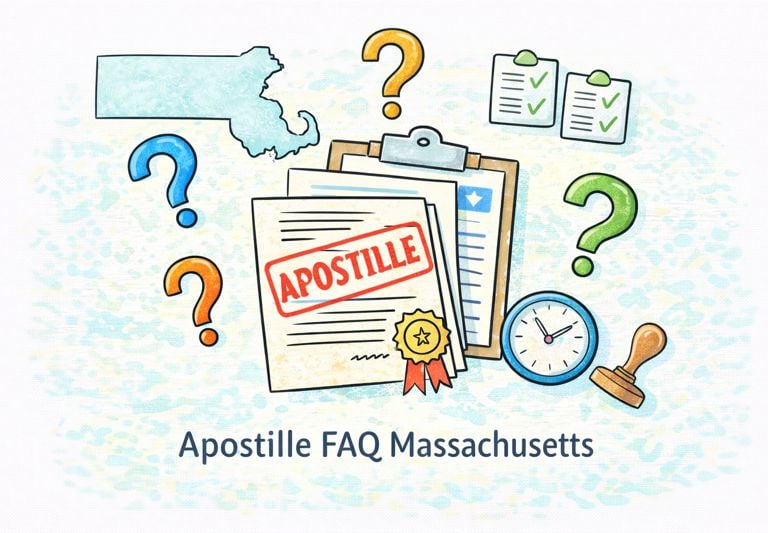
Apostille FAQ Massachusetts
Introduction
Many people feel confused when they first encounter the apostille process. Questions about document requirements, notarization, processing time, and country rules are extremely common.
This Apostille FAQ for Massachusetts answers the most frequently asked questions in clear and simple terms so you understand the process before submitting documents.
What Is an Apostille?
An apostille is an official certificate that verifies a document issued in the United States is authentic for use in another country.
It confirms:
The signature is valid
The seal is official
The issuing authority is legitimate
Apostilles are used only for countries that are members of the Hague Apostille Convention.
Who Issues Apostilles in Massachusetts?
Apostilles in Massachusetts are issued by the Massachusetts Secretary of the Commonwealth.
Notaries public do not issue apostilles.
Town clerks do not issue apostilles.
Courts do not issue apostilles.
Documents must meet state requirements before submission.
What Documents Can Be Apostilled in Massachusetts?
Common documents include:
Birth certificates
Marriage certificates
Divorce decrees
Death certificates
Diplomas and transcripts
Affidavits
Powers of attorney
Consent letters
Public records must be certified copies.
Private documents usually require notarization.
Do Documents Need to Be Notarized Before Apostille?
Not all documents require notarization.
Certified public records usually do not need notarization.
Private documents such as affidavits and powers of attorney do require notarization.
For notarization before apostille, a trusted local notary resource is:
https://middlesexnotary.com/
(This link is intentionally placed only in the notarization context.)
How Long Does Apostille Processing Take in Massachusetts?
Processing time varies depending on:
Submission method
Document accuracy
Volume of requests
State apostilles typically take several business days.
Mail submissions take longer.
Federal authentication takes additional time.
How Much Does an Apostille Cost in Massachusetts?
Fees are charged per document.
Costs depend on:
Number of documents
State or federal processing
Additional authentication steps
Fees may change, so confirming current rates before submission is recommended.
What Is the Difference Between Apostille and Embassy Legalization?
Apostilles are used for Hague Convention countries.
Embassy legalization is required for non-Hague countries and involves:
State authentication
Federal authentication
Embassy or consulate legalization
Submitting the wrong process can cause rejection.
Do Apostilles Expire?
Apostilles do not technically expire.
However, some receiving authorities require recently issued documents. Always confirm document age requirements with the destination country.
Are Translations Required After Apostille?
Some countries require documents to be translated after apostille.
Important points:
Translations may need notarization
Some countries require sworn translations
Order of apostille and translation matters
Always confirm translation rules before submitting.
Common Reasons Apostille Requests Are Rejected
Uncertified documents
Incorrect notarization wording
Using short-form certificates
Submitting documents in the wrong order
Choosing apostille instead of embassy legalization
Avoiding these mistakes saves time and money.
When Do People Usually Need Apostilles?
Apostilles are commonly required for:
Immigration and visa applications
Marriage abroad
Citizenship applications
Study or work abroad
International business matters
Without proper authentication, documents may be rejected.
Final Thoughts
Understanding the apostille process helps avoid delays and frustration. Preparing documents correctly, knowing when notarization is required, and following the correct authentication path ensures smooth acceptance abroad.
This FAQ provides clear answers to help you move forward confidently.