

- Europe (49)
- Americas (33)
- Asia & Middle East (21)
- Africa (17)
- Oceania (10)
- New members
- Special cases
- Territories
What this list means for your document
If the country where you will use the document is on this list, the issuing U.S. authority attaches an apostille and you are finished. No embassy, no consulate. For a Massachusetts document, that is the Secretary of the Commonwealth in Boston, for $6 per document. For a federal document such as an FBI background check, it is the U.S. Department of State. Not sure which applies? Read what an apostille is, then how to get one in Massachusetts.
Each list below is alphabetical. The year is when the Convention entered into force for that country, from the HCCH status table.
Europe and the Caucasus (49)
- Albania since 2004
- Andorra since 1996
- Armenia since 1994
- Austria since 1968
- Azerbaijan since 2005
- Belarus since 1992
- Belgium since 1976
- Bosnia and Herzegovina since 1992
- Bulgaria since 2001
- Croatia since 1991
- Cyprus since 1973
- Czechia since 1999
- Denmark since 2006
- Estonia since 2001
- Finland since 1985
- France since 1965
- Georgia since 2007
- Germany since 1966
- Greece since 1985
- Hungary since 1973
- Iceland since 2004
- Ireland since 1999
- Italy since 1978
- Kosovo since 2016
- Latvia since 1996
- Liechtenstein since 1972
- Lithuania since 1997
- Luxembourg since 1979
- Malta since 1968
- Moldova since 2007
- Monaco since 2002
- Montenegro since 2006
- Netherlands since 1965
- North Macedonia since 1991
- Norway since 1983
- Poland since 2005
- Portugal since 1969
- Romania since 2001
- Russia since 1992
- San Marino since 1995
- Serbia since 1992
- Slovakia since 2002
- Slovenia since 1991
- Spain since 1978
- Sweden since 1999
- Switzerland since 1973
- Türkiye since 1985
- Ukraine since 2003
- United Kingdom since 1965
Kosovo is a contracting party, but 29 members have objected to its accession or declared that the Convention does not apply with it, so the Convention does not apply between Kosovo and those countries (see special cases).
North, Central and South America and the Caribbean (33)
- Antigua and Barbuda since 1981
- Argentina since 1988
- Bahamas since 1973
- Barbados since 1966
- Belize since 1993
- Bolivia since 2018
- Brazil since 2016
- Canada since 2024
- Chile since 2016
- Colombia since 2001
- Costa Rica since 2011
- Dominica since 1978
- Dominican Republic since 2009
- Ecuador since 2005
- El Salvador since 1996
- Grenada since 2002
- Guatemala since 2017
- Guyana since 2019
- Honduras since 2004
- Jamaica since 2021
- Mexico since 1995
- Nicaragua since 2013
- Panama since 1991
- Paraguay since 2014
- Peru since 2010
- Saint Kitts and Nevis since 1994
- Saint Lucia since 2002
- Saint Vincent and the Grenadines since 1979
- Suriname since 1975
- Trinidad and Tobago since 2000
- United States since 1981
- Uruguay since 2012
- Venezuela since 1999
Asia and the Middle East (21)
- Bahrain since 2013
- Bangladesh since 2025
- Brunei since 1987
- China since 2023
- India since 2005
- Indonesia since 2022
- Israel since 1978
- Japan since 1970
- Kazakhstan since 2001
- Kyrgyzstan since 2011
- Mongolia since 2009
- Oman since 2012
- Pakistan since 2023
- Philippines since 2019
- Saudi Arabia since 2022
- Singapore since 2021
- South Korea since 2007
- Tajikistan since 2015
- Thailand from 28 Feb 2027
- Uzbekistan since 2012
- Vietnam since 2026
Thailand has deposited its accession, but the Convention only applies there from 28 February 2027. Until then, documents for Thailand go through legalization. Hong Kong and Macao are covered through China (see territories).
Africa (17)
- Algeria since 2026
- Botswana since 1966
- Burundi since 2015
- Cabo Verde since 2010
- Eswatini since 1968
- Lesotho since 1966
- Liberia since 1996
- Malawi since 1967
- Mauritius since 1968
- Morocco since 2016
- Namibia since 2001
- Rwanda since 2024
- Sao Tome and Principe since 2008
- Senegal since 2023
- Seychelles since 1979
- South Africa since 1995
- Tunisia since 2018
Oceania and the Pacific (10)
- Australia since 1995
- Cook Islands since 2005
- Fiji since 1970
- Marshall Islands since 1992
- New Zealand since 2001
- Niue since 1999
- Palau since 2020
- Samoa since 1999
- Tonga since 1970
- Vanuatu since 1980
The Cook Islands and Niue are contracting parties in their own right, separate from New Zealand.
New Hague Convention members since 2021
The list has grown fast. These countries moved from embassy legalization to apostille in the last five years. If you followed old advice for any of them, check again.
| Country | Accession deposited | Apostille accepted from |
|---|---|---|
| Thailand | 30 Jun 2026 | 28 Feb 2027 (not yet in force) |
| Vietnam | 31 Dec 2025 | 11 Sep 2026 |
| Algeria | 5 Nov 2025 | 9 Jul 2026 |
| Bangladesh | 29 Jul 2024 | 30 Mar 2025 |
| Rwanda | 6 Oct 2023 | 5 Jun 2024 |
| Canada | 12 May 2023 | 11 Jan 2024 |
| China | 8 Mar 2023 | 7 Nov 2023 |
| Senegal | 13 Jul 2022 | 23 Mar 2023 |
| Pakistan | 8 Jul 2022 | 9 Mar 2023 |
| Saudi Arabia | 8 Apr 2022 | 7 Dec 2022 |
| Indonesia | 5 Oct 2021 | 4 Jun 2022 |
| Singapore | 18 Jan 2021 | 16 Sep 2021 |
| Jamaica | 2 Nov 2020 | 3 Jul 2021 |
A document apostilled before a country’s start date is not covered retroactively. If you hold an older document, ask the receiving office whether it wants a new apostille.
Special cases: objections between member countries
When a country accedes to the Convention, existing members have six months to object. Where an objection stands, the Convention does not apply between those two countries, and documents between them still need legalization.
For U.S. documents, this does not limit you. The United States’ only objection, to Liberia’s accession, was withdrawn on 20 May 2015, and no member has an objection in force against the United States. A U.S. apostille is valid in all 129 countries above.
The objections matter if you are handling a document from another country, for example an Indian document for use in Germany. Objections still in effect according to the HCCH, as of November 2026:
| Acceding country | Members that object (the Convention does not apply between the two) |
|---|---|
| Algeria | Austria, Germany, Greece |
| Bangladesh | Argentina, Austria, Belgium, Czechia, Denmark, Estonia, Finland, France, Germany, Greece, Lithuania, Netherlands |
| Burundi | Austria, Czechia, Germany, Poland |
| China | India |
| Dominican Republic | Germany |
| India | Germany |
| Kyrgyzstan | Austria, Greece |
| Liberia | Belgium, Germany |
| Mongolia | Austria, Belgium, Finland, Germany, Greece |
| Morocco | Germany |
| Pakistan | Austria, Czechia, Denmark, Finland, Germany, Greece, Netherlands, Poland |
| Philippines | Germany |
| Rwanda | Germany |
| Senegal | Austria, Germany |
| Tajikistan | Austria, Belgium, Germany |
| Tunisia | Austria, Germany, Greece |
| Uzbekistan | Austria, Germany, Greece |
| Vietnam | Austria, Czechia, Germany |
| Kosovo | Argentina, Armenia, Austria, Azerbaijan, Belarus, Brazil, Chile, China (for Hong Kong and Macao), Cyprus, Ecuador, Georgia, Germany, Greece, India, Mauritius, Mexico, Moldova, Namibia, Nicaragua, Paraguay, Peru, Romania, Russia, Serbia, Slovakia, Spain, Ukraine, Uzbekistan, Venezuela |
Objections are withdrawn regularly. Recent examples: Germany withdrew its objection to Azerbaijan (16 March 2026), the Netherlands to Senegal (28 January 2026), Finland to the Philippines (22 August 2025), and Belgium to Kyrgyzstan, Tunisia and Uzbekistan (11 June 2025). Always check the HCCH notifications for the pair of countries you care about.
Territories covered by the Convention
Some territories apply the Convention through another member. Documents headed there get an apostille too:
- China: Hong Kong and Macao (each with its own competent authority, and both applying the Convention before mainland China joined).
- United Kingdom: Anguilla, Bermuda, British Antarctic Territory, British Virgin Islands, Cayman Islands, Falkland Islands, Gibraltar, Guernsey, Isle of Man, Jersey, Montserrat, Saint Helena, Turks and Caicos Islands.
- Netherlands: Aruba, Curaçao, Sint Maarten, and Bonaire, Sint Eustatius and Saba.
- Denmark: the Faroe Islands (since 13 December 2021). Greenland is not listed in the HCCH extension table.
Not members: Taiwan, the State of Palestine and the Holy See (Vatican City) are not contracting parties, so documents for them follow other routes.
If your country is not on the list
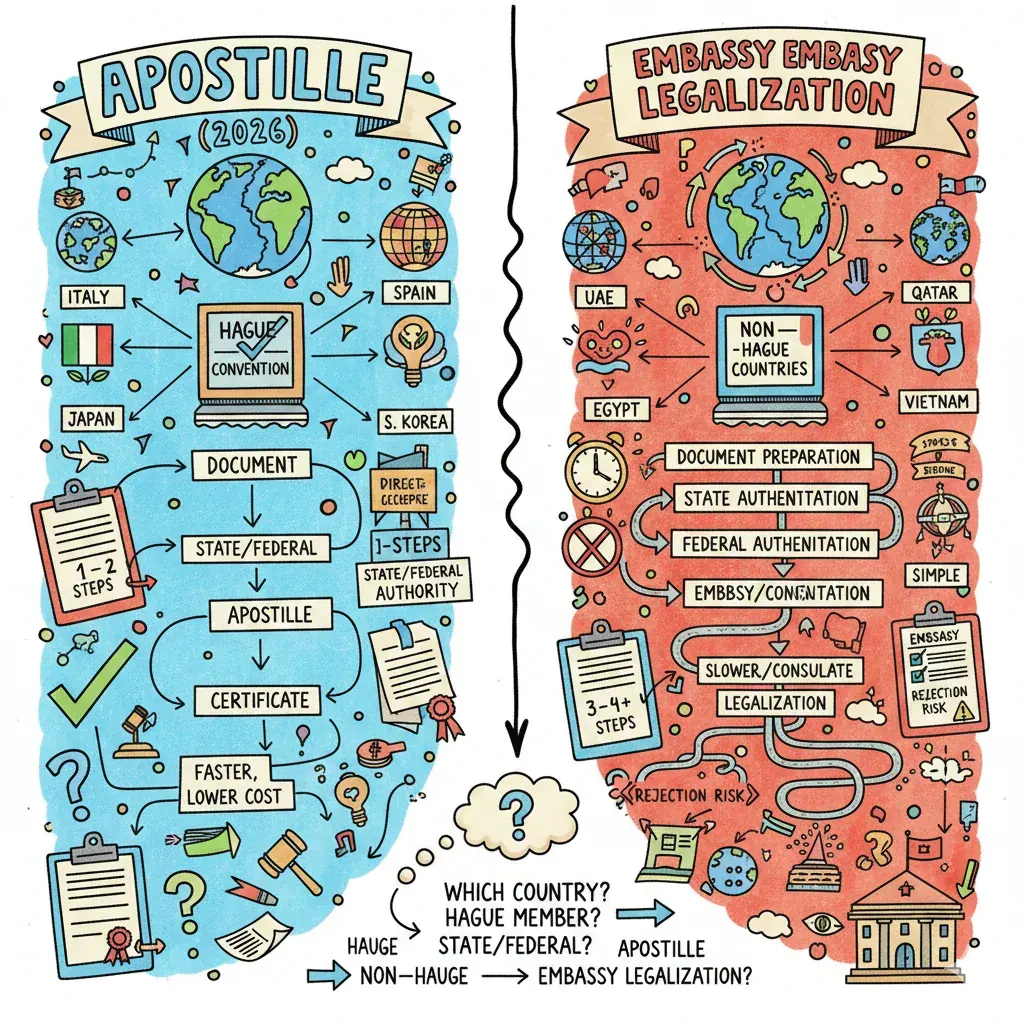
If the destination is not a member, an apostille will not be accepted. The document gets a certification from the issuing state, is usually authenticated again by the U.S. Department of State, and is then legalized by the destination country’s embassy or consulate. The United Arab Emirates, Qatar, Kuwait, Egypt, Jordan, Lebanon, Iraq, Nigeria, Ghana, Kenya, Malaysia and Sri Lanka all work this way. See the full list of non-Hague countries and how embassy legalization works.
How we keep this list accurate
We check this list against the official HCCH status table for the Apostille Convention and the HCCH notifications on objections. The HCCH table was last updated 30 June 2026; we checked it on 2 November 2026. The HCCH is the authority; if the two ever disagree, it is right and we will fix this page. Country names are shortened (for example “Netherlands” for “Kingdom of the Netherlands”, “South Korea” for “Republic of Korea”).
Requirements beyond the apostille (translations, recent copies, long-form certificates) are set by each receiving authority. We summarize the common ones on apostille by country.